Educator & researcher · Sydney, Australia
Most AI training teaches tools. I teach judgement.
AI capability grows when people connect the technology to the realities of their work, learn from one another, and build practices they can judge and improve for themselves. I'm an educator with a doctorate in human–AI collaboration, and I help individuals and teams do that through education, research and practical experimentation.
PhD, Human–AI CollaborationUniversity of CanberraPublished in Phil. Trans. of the Royal Society A
Work with me
Most people don't need a one-off course on the latest AI tool. They need the capacity to keep learning as the tools change.
Advisory conversation
One session to work out what AI actually means for your role or field — what to take seriously, what to ignore, and what to try first.
Coaching & workshops
Ongoing work with individuals or teams on the AI in your real workflows — writing, research, analysis — until good use is a habit, not an event.
AI capability review
For organisations deciding where AI belongs and where it doesn't — and what your people need to learn before adoption becomes policy.
Not sure which fits? Start with an email
My approach
I come to AI through education. Good AI use isn't a matter of knowing which tool to open or which prompt to copy — it's a learning problem. People need to understand what they're trying to do, what the system can and can't help with, how to judge the output, and how to keep improving over time.
My work usually begins with a needs analysis: what are you trying to do, what do people already know, and where are the risks, gaps, and opportunities? From there, I shape the content, routines, and evaluation that make AI useful in your setting.
Tools change. The point is to build capability that survives the next product update.
How I work
Enable
I help people build the judgement, routines and resources to work with AI without becoming dependent on any one tool — or on me.
Connect
I bring educational, technical and organisational perspectives into the same conversation, then translate what's possible into choices people can act on in real work.
Learn alongside
I don't start with a universal answer. I start with what you're trying to do, what your people already know, and what the setting demands. We test approaches and improve them together.
Make responsibility practical
Privacy, bias, safety, agency and quality have to shape everyday practice. I help teams turn those questions into routines and review points, not abstract principles.
This framing grew out of my doctoral research at the University of Canberra, where I studied how people and AI systems can be prepared to work together deliberately over time.
Research in practice
AI Readiness for SMBs — with Milnsbridge. I'm collaborating with Adrian Weir to explore how research into human–AI collaboration can help Australian businesses make informed decisions about AI. We're combining research and practitioner experience, sharing our thinking as the work develops.
-
Bringing research and practice together
An introduction to our public inquiry: why AI readiness is more than a checklist, how research and frontline IT experience complement each other, and what we plan to learn before developing a practical tool.
-
AI readiness on your terms: start with one real use case
A research-grounded briefing on assessing readiness through one bounded workflow: clarify the purpose, ownership, data, safeguards and evidence before expanding AI's role.
About
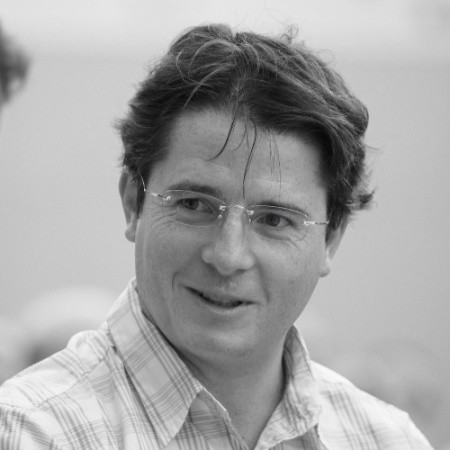
I'm Dr Finlay McCall, an independent researcher and educator based in Australia. My PhD thesis, Anticipating Curriculum and Course Design for Human-AI Collaboration, examined how we design learning for the cognitive partnership between people and machines — a line of work I continue today through research and practice in human-machine education.
I'm also collaborating with Adrian Weir on Milnsbridge's AI Readiness for SMBs series, translating research into practical guidance for Australian businesses; my Milnsbridge author profile brings that work together.
I'm currently Project Manager and Research Assistant on a University of Canberra and ACT Education Directorate research project on teachers' use of generative AI in schools, led by A/Prof Eleni Petraki.
Before this, I spent more than twenty years teaching across Europe, Asia, and Australia.
Pedagogy is the thread through all of it. It's the lens I bring to AI.
I'm especially interested in roles and collaborations that connect AI adoption with education, professional learning, community, research translation and responsible practice.
- PhD in Education University of Canberra
- Master of Education (TESOL) University of Sydney
- Cambridge DELTA Diploma in English Language Teaching
- CELTA Teacher Trainer & IELTS Examiner Twenty years across Europe, Asia, and Australia
Research
- 2025 PhD thesis. Anticipating Curriculum and Course Design for Human-AI Collaboration, University of Canberra. How to design courses and curricula that prepare people to work with AI deliberately, rather than react to it.
- 2021 Abbass, H., Petraki, E., Hussein, A., McCall, F., & Elsawah, S. (2021). A model of symbiomemesis: machine education and communication as pillars for human-autonomy symbiosis. Philosophical Transactions of the Royal Society A. doi.org/10.1098/rsta.2020.0364 A model for how humans and autonomous systems can learn from each other over time — education as a two-way street.
- 2021 McCall, F., Hussein, A., Petraki, E., Elsawah, S., & Abbass, H. (2021). Towards a systematic educational framework for human-machine teaming. IEEE International Conference on Engineering, Technology & Education (TALE), 375–382. doi.org/10.1109/TALE52509.2021.9678853
- 2017 McCall, F. (2017). Using microblogs on Facebook to develop students' academic reading and writing skills. University of Sydney Papers in TESOL, 12.
Full list on Google Scholar